
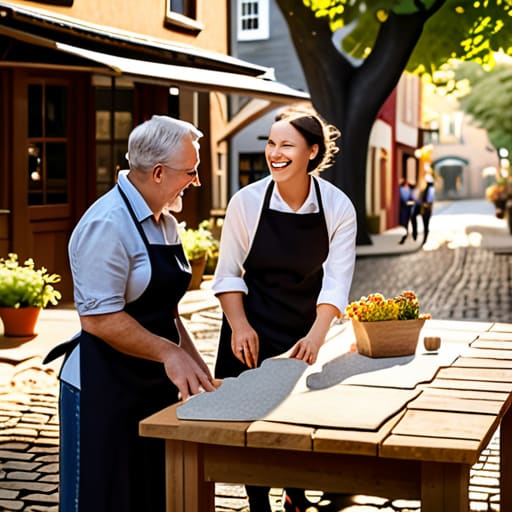
I remember sitting in a drafty community hall back in ’94, staring at a pile of glossy, expensive brochures about “corporate social responsibility” that promised to bridge the gap between commerce and community. It was all nonsense. You don’t win over the butcher or the florist by sending a formal, typed letter on letterhead or presenting a thirty-page strategic plan; you win them over by showing up when they’re busy and proving you aren’t just another group looking for a handout. Most people overcomplicate how to involve local businesses by treating them like distant institutions rather than the actual neighbours they are.
I’ve spent thirty-one years seeing exactly where these connections succeed and, more importantly, where they fall apart because nobody bothered to write down the simple details. I’m not here to give you a lecture on economic synergy or high-level networking. Instead, I’m going to show you the practical, unvarnished truth of how to build a partnership that actually lasts. We are going to talk about real conversations, shared interests, and how a small committee can turn a shopkeeper into your strongest ally.
Six People One Bank Account and How to Involve Local Businesses

When I was working in regeneration, I saw too many well-meaning committees treat the local high street like a separate entity rather than the very heart of the project. If you want to move beyond just asking for a donation, you have to look at your group through the lens of community partnership strategies. It isn’t about a handout; it’s about showing the butcher or the florist that a cleaner, safer street actually brings more feet through their door.
I’ve found that the most effective way to start is by identifying what they actually need. A local accountant might not have fifty pounds to spare, but they might offer pro bono professional services to help your committee make sense of its first annual audit. That is worth far more than a small cheque. Instead of sending a formal letter that will likely end up in the recycling, walk in during a quiet hour. Ask them what their biggest headache is. When you align your committee’s goals with their practical survival, you stop being a nuisance and start becoming a valuable local ally.
Turning Small Business Engagement Models Into Neighborhood Engines

The mistake I see most often—and I’ve seen it dozens of times in my thirty years in local government—is treating a shopkeeper like a donor rather than a neighbor. If you approach the local butcher or the florist only when you need a ten-pound donation, you’ve already lost them. Real community partnership strategies aren’t built on handouts; they are built on mutual respect. You need to show them how a cleaner, brighter street actually brings more feet through their door. When a small business sees that your committee is working to improve the local footfall, they stop seeing you as a nuisance and start seeing you as a partner in their own success.
Instead of asking for cash, look for ways to utilize pro bono professional services. Perhaps the accountant down the road can help your committee make sense of its first annual audit, or the local printer might donate a few flyers for your next meeting. These small, practical contributions are often more sustainable than a one-off cheque. When you integrate these small business engagement models into your regular planning, you create a cycle of support that doesn’t rely on a single windfall, but on the steady, reliable rhythm of the street itself.
The Real Local Economic Impact of a Shared Vision

When I was working in regeneration, I saw too many projects fail because they treated shop owners like ATMs rather than neighbors. If you want to see a real local economic impact, you have to move beyond asking for donations. It’s about showing them that a cleaner, safer, and more vibrant street actually brings more footfall through their doors. When a committee of six manages to coordinate a little bit of greenery or better lighting, the local cafe sees more morning commuters and the florist sees more weekend strollers. It’s a circular effect that starts with a shared vision.
I’ve often found that the most sustainable community partnership strategies don’t rely on cash alone. Sometimes, the most valuable thing a local accountant or solicitor can offer is a few hours of pro bono professional services to help your committee stay organized. When a business owner sees that you aren’t just asking for money, but are actively building something that makes their place of work better, they stop being “sponsors” and start becoming invested stakeholders. That shift in mindset is exactly what keeps a street alive for the long haul.
Moving Beyond Charity With Community Partnership Strategies
Now, we have to be careful. If you approach a local shopkeeper asking for a donation, you’re essentially asking for charity. And while I’m sure many are happy to help, charity is a one-way street that often runs dry when the budget gets tight. If we want these connections to last, we need to move toward genuine community partnership strategies where everyone gets something back. It’s about moving from “please give us ten pounds” to “let’s work together to bring more footfall to this corner.”
I’ve seen this work best when we tap into pro bono professional services. Perhaps the accountant on the high street can help your committee tidy up those messy spreadsheets, or the local printer can help you with your flyers in exchange for a mention in your newsletter. When you frame it as a mutual exchange rather than a handout, you aren’t just asking for a favor; you are building a local ecosystem. It’s much harder for a business to walk away from a committee when they feel they are an integral part of the neighborhood’s success.
Scaling Change Through Pro Bono Professional Services
Now, I’ve seen many well-meaning committees stall out simply because they couldn’t make sense of a spreadsheet or a legal contract. This is where you can tap into something far more valuable than a small cash donation. You should be looking for pro bono professional services from the very people who work in our high streets. I’m talking about the accountant three doors down or the solicitor who handles the estate agency. They don’t need to write a cheque; they just need to lend you an hour of their expertise to ensure your committee’s foundations are solid.
When you approach these professionals, don’t treat it like a plea for help. Instead, frame it as part of their corporate social responsibility initiatives that actually leaves a footprint in the place they live and work. If the local bookkeeper helps you set up your accounts correctly from day one, you aren’t just saving money; you are building a professional standard that keeps the group from folding when the initial excitement fades. It turns a hobbyist group into a reliable community institution.
Refining Corporate Social Responsibility Initiatives for the Street Level
Now, I’ve seen plenty of large corporations swoop into a neighborhood with grand promises, only for their corporate social responsibility initiatives to vanish the moment the press release is filed. It feels hollow because it’s usually designed for a boardroom, not a high street. If we want these efforts to actually stick, we have to translate their big-picture goals into something tangible for our committee. Instead of asking them for a vague donation, ask them to help us solve a specific, local problem—like fixing the lighting near the community center or sponsoring a seasonal market.
The trick is to move away from “one-off” gestures and toward sustained community partnership strategies. I always tell my neighbors: don’t just ask for their money; ask for their expertise. If a local firm has a legal team or an accounting department, see if they can offer a few hours of their time to help us tighten up our own governance. When a business sees that their contribution isn’t just disappearing into a black hole, but is actually being recorded and used to build something lasting, they become invested in our success.
Five Ways to Get the High Street on Your Side
- Stop treating them like sponsors and start treating them like neighbors. A local shop owner doesn’t want a formal invitation to a committee meeting; they want to know if your street garden project will increase footfall during their quiet Tuesday afternoon slump.
- Offer something back that isn’t just a thank-you note. If your little group is organizing a street fair, don’t just ask for a donation; ask if they can provide the bunting or the refreshments in exchange for being the ‘official partner’ on your flyers.
- Respect the clock. I spent thirty years in local government and I learned very quickly that a business owner’s most precious commodity is time. If you need to talk, do it during their lull, not when they have a queue of customers out the door.
- Keep the paperwork light but the promises heavy. If you tell the local cafe you’ll mention them in your monthly newsletter, make sure you actually do it. In my experience, nothing kills a partnership faster than a committee that forgets who helped them in the first place.
- Find the ‘anchor’ business. Every street has that one shop or pub where everyone naturally gravitates. If you can win over the person behind that counter, they will do half the recruiting for your committee just by chatting with their regulars.
## The Shopkeeper is Not a Sponsor
Stop treating the local florist or the corner grocer like a piggy bank for your fundraising drives; they aren’t just donors, they are the very heartbeat of the street, and they’ll only commit when they see that your committee’s minutes actually show how their involvement makes the pavement outside their door a bit safer or a bit brighter.
Deborah Castellanos
From Paperwork to Pavement
When I look back at my years in local government, the projects that actually stuck weren’t the ones with the most funding, but the ones where the local shopkeeper felt like a partner rather than a donor. We’ve talked about moving past simple charity, leveraging professional skills, and making sure your committee’s bank account is seen as a tool for mutual growth rather than just a request for a handout. It’s about building those authentic connections—whether that’s a quick chat over a counter or a formal partnership—that turn a group of six people into a legitimate neighborhood engine. If you remember nothing else, remember that business engagement is a two-way street, and it only works when both sides see a clear benefit in the shared vision.
I’ve spent a lifetime watching committees dissolve because they lost their momentum or their sense of purpose. But when you bring the local economy into your fold, you aren’t just running a club; you are weaving a safety net for the entire street. Don’t let the administrative side of things intimidate you, and please, for heaven’s sake, write down your agreements so the next person knows how to keep the momentum going. A small, organized committee with the support of the local high street can do more than just tidy up a park; you can fundamentally reshape the character of your community, one handshake at a time.
