

I remember sitting in a drafty community hall back in ’94, listening to a consultant drone on about “inclusive frameworks” and “accessibility paradigms” while a perfectly capable woman with a walker sat in the corner, ignored by everyone. It was infuriating. People make it sound so much more complicated than it actually is, as if there’s some grand, expensive manual on how to volunteer with a disability. They treat it like a delicate legal minefield instead of what it really is: just a person wanting to lend a hand and a group of neighbors making sure the door is wide enough.
I’m not here to give you a lecture on theory or a list of bureaucratic hurdles. I’ve spent thirty years in local government seeing exactly where these tiny groups trip up, and I want to save you that headache. I’m going to show you the practical, boots-on-the-ground way to get involved, whether you are the one looking to help or the one organizing the committee. We’ll skip the jargon and focus on the actual mechanics of making sure everyone can pull their weight and feel welcome.
Understanding How to Volunteer With a Disability

When I was working in local government, I saw far too many well-meaning community groups stumble because they assumed “volunteering” meant standing on your feet for four hours at a bake sale. That isn’t the reality for everyone. To truly understand this, we have to stop looking at disability as a problem to be solved and start seeing it as a different way of contributing. It’s about overcoming barriers to community service by realizing that a person’s value isn’t tied to their physical mobility or their ability to sit in a drafty village hall.
If you are looking to get involved, or if you are running a group, you need to look for adaptive volunteering roles. This might mean someone managing the group’s accounts from their living room via a laptop, or a neighbor providing digital outreach instead of handing out flyers on a street corner. It isn’t about charity; it’s about finding the right slot in the machinery. When we focus on reasonable accommodations for volunteers, we aren’t doing anyone a special favour—we are simply ensuring the committee has all the talent it needs to actually get things done.
Key Things to Know
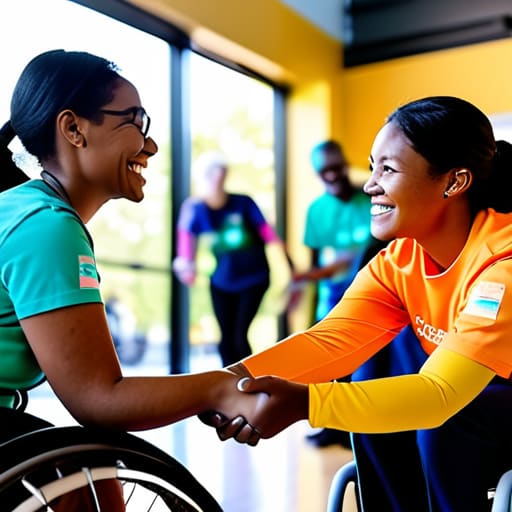
Now, if you’re looking to get stuck in, you need to understand that it isn’t always about finding a “special” role. Often, it’s just about a bit of common sense and a willingness to tweak the way things are done. When I was working in local government, I saw so many brilliant people sidelined simply because a group hadn’t thought about reasonable accommodations for volunteers. It isn’t about making things difficult; it’s about making sure the door is actually unlatched so someone can walk through it.
You also have to look at the environment itself. If a meeting is held in a drafty church hall with three steep steps at the entrance, you haven’t really invited everyone, have you? True inclusive volunteer recruitment means looking at your tasks through a different lens. Perhaps a role that usually requires standing at a welcome desk could be done sitting down, or a heavy lifting task could be swapped for something administrative. It’s about focusing on what a person can contribute rather than what they might struggle with. Once you clear those small hurdles, you’ll find that the talent available to your committee is immense.
Practical Tips and Steps

When I was working in local government, I saw far too many good people sit on the sidelines simply because the “help wanted” signs didn’t account for their reality. If you are looking to get involved, don’t wait for an organization to hand you a perfect role. Instead, look for adaptive volunteering roles that can be tailored to your specific strengths. If a group is doing something physical like garden clearing, perhaps you can offer to manage their social media or handle their small grant applications from your kitchen table.
For those of you running the committees, the responsibility lies with you to facilitate this. It isn’t about making a grand gesture; it is about providing reasonable accommodations for volunteers so they can actually show up and contribute. This might mean ensuring a meeting room has a ramp, or simply making sure the agenda is sent out a week early so someone can prepare. We often spend so much time worrying about the “big” problems that we forget how much a small change in how we organize can make a massive difference in overcoming barriers to community service.
Common Mistakes to Avoid
One mistake I saw constantly during my years in local government was the assumption that “helping” means treating everyone the same. In my experience, the quickest way to lose a capable person is to offer them a role that doesn’t suit their physical or sensory needs, then act surprised when they can’t show up. We often fall into the trap of thinking we are being inclusive, but if we aren’t actively looking for adaptive volunteering roles, we are essentially building a wall instead of a doorway. It isn’t about making excuses; it’s about being practical.
Another pitfall is the “wait and see” approach to accessibility. I’ve seen so many small committees wait until a volunteer asks for help before they even consider reasonable accommodations for volunteers. By then, the person often feels like a burden rather than a valued member of the team. Don’t wait for the request. Instead, make inclusive volunteer recruitment part of your initial planning. If you’ve got a meeting in a drafty church hall with three steep steps, you’ve already excluded half your potential committee before the first minute is even recorded.
Final Thoughts
I’ve spent three decades watching well-meaning community projects fizzle out, and more often than not, it’s because they forgot to build a wide enough door at the very start. If you want your committee to actually last, you can’t just invite people in and hope for the best; you have to be intentional about inclusive volunteer recruitment. It isn’t about being “charitable”—it’s about realizing that a street is only as strong as the diverse voices sitting around its meeting table.
As you move forward, don’t let the fear of doing something wrong stop you from starting. Whether it’s finding the right adaptive volunteering roles or simply ensuring your meeting hall has a ramp, these small, practical steps are what turn a fleeting idea into a permanent fixture of the neighbourhood. I’ve always said that a group is only as good as its records, but I’d add this: a group is only as healthy as its accessibility. Get those first few people involved, write down what works, and keep building that momentum.
Five ways to make sure everyone can actually get stuck in
- Don’t assume you know what someone can or can’t do. I’ve seen well-meaning people sit someone down in a chair and tell them they can only do filing, when that person actually had a brilliant career in accounting. Just ask, “How can we make this role work for you?” and leave it at that.
- Check the physical reality of your meeting spot. It sounds basic, but if your little committee meets in a drafty church hall with a heavy door and no ramp, you’ve effectively locked half your neighbors out before the first agenda item is even read.
- Be mindful of the “hidden” stuff. Not every disability is visible. Someone might need a quiet corner because loud noises are overwhelming, or they might need to step away frequently. A little flexibility in how we run our sessions goes a long way.
- Get your paperwork right from the start. If you’re a small group, don’t make your application forms or volunteer sign-up sheets twenty pages of dense, tiny print. If someone has visual impairments or dyslexia, a complicated form is just a wall standing in their way.
- Focus on the contribution, not the accommodation. We aren’t running a care service; we’re running a community group. The goal is to use that person’s skills to improve our street. Keep the focus on what they bring to the table, rather than what the “problem” might be.
## The real value of a helping hand
“We often spend too much time worrying about the logistics of what someone can’t do, when the real magic happens when we stop managing disabilities and start managing opportunities. A volunteer isn’t a problem to be solved; they are a pair of hands, a brain, and a heart ready to help us fix this street, provided we actually make the space for them to sit at the table.”
Deborah Castellanos
A Final Word from the Committee Table
Looking back over everything we’ve discussed, it really comes down to a few simple truths. Whether you are the one looking to offer your time or the person running the local garden club, the secret is in the details and the communication. We’ve talked about identifying the right roles that suit your specific needs, being brave enough to ask for the necessary adjustments, and avoiding those common pitfalls where assumptions replace actual conversation. Remember, volunteering isn’t about fitting yourself into a pre-made, rigid box; it’s about finding that sweet spot where your unique skills meet a community need. If we get the practicalities right from the start, we prevent the kind of confusion that causes good people to drop out halfway through the year.
I’ve spent thirty years watching community projects bloom and, sadly, watching others wither away because they lacked a solid foundation. But I have also seen a handful of dedicated neighbors change the very fabric of a street just by showing up. If you have a disability and a desire to help, please don’t let the fear of “how” stop you. Grab a few neighbors, find your footing, and start making a difference. You don’t need a massive organization or a huge budget to be useful; you just need a bit of courage and a clear plan. Small groups can do big things, and I truly believe the world needs exactly what you have to offer.
