

I remember sitting in a drafty village hall back in ’94, watching a local committee spend forty minutes arguing over the legal liability of a laminated poster. They were so busy debating the fine print of how to handle a lost child procedure that they completely missed the fact that nobody actually knew who was supposed to grab the walkie-talkies or call the warden. It was a classic case of paralysis by analysis, and frankly, it’s a waste of everyone’s time. When a child goes missing at a community fete or a street party, you don’t need a twenty-page manual written by a lawyer; you need a plan that works when the adrenaline hits and the panic sets in.
I’m not here to give you more bureaucratic fluff or expensive training seminars that nobody will remember by next Tuesday. Instead, I’m going to show you how to build a practical, boots-on-the-ground response using nothing more than a handful of reliable neighbors and a clear set of roles. I’ll lay out exactly how to organize your small group so that when the unthinkable happens, you aren’t scrambling—you’re acting.
The First Sixty Seconds How to Handle a Lost Child Procedure

When the panic sets in, you don’t have time to consult a binder. The first sixty seconds are about breaking the paralysis. If you’re running a community fair or a street party, you need a designated person—someone calm, ideally not the person who actually lost the child—to immediately begin emergency communication for missing minors. This isn’t the time for a committee vote; it’s about a swift, coordinated shout. One person stays at the “home base” (the registration desk or the main stall), while another begins a systematic sweep of the immediate perimeter.
You must also have a clear way of identifying lost children in crowds. I’ve seen too many well-meaning neighbors wander off in different directions without a common description. Instead of just shouting “Have you seen a boy?”, use the details you should have gathered at the gate: “We are looking for Leo, age five, wearing a bright yellow raincoat.” If your group has a formal missing child emergency response plan, this is when those pre-agreed roles actually matter. You aren’t just searching; you are executing a pattern.
Deploying Your Team Child Safeguarding Protocols for Staff

Once the initial alarm is raised, the next step is moving from panic to precision. This is where your child safeguarding protocols for staff actually matter. I’ve seen too many community fairs descend into chaos because everyone was running in different directions. Instead, you need a pre-arranged deployment. I always suggest a “zonal” approach: assign two people to the main gates, two to the food stalls, and one to stay at the central information desk. The person at the desk is your anchor; they manage the lost child reunification process by keeping a calm, clear record of who is looking for whom.
The most important thing to remember is that your volunteers aren’t police officers, but they are your eyes and ears. Instruct them that if they spot a child who looks distressed, they shouldn’t just wander off with them; they should stay in a highly visible, public area. We need to ensure clear lines of communication are established immediately—whether that’s via walkie-talkies or a specific WhatsApp group. If the child isn’t found within your predetermined timeframe, that is when you trigger the formal emergency response. Don’t wait until the sun goes down to decide who calls the authorities.
The Perimeter Lock an Event Security Lost Child Policy
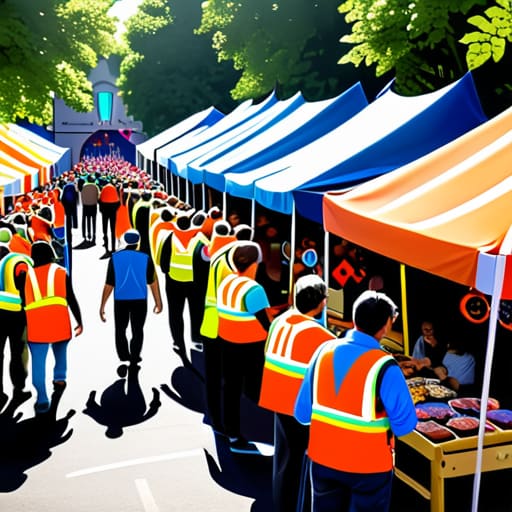
When you’re running a street fair or a small community fête, you can’t rely on professional security to keep an eye on every toddler. You need an event security lost child policy that relies on your volunteers, not just luck. I’ve seen too many local festivals descend into chaos because there was no clear plan for “locking down” the area. The moment a child is reported missing, your designated “gatekeepers” need to stop new people from entering the site immediately. This isn’t about being unwelcoming; it’s about shrinking the field so your search becomes manageable.
Once those gates are held, your team should move to a structured lost child reunification process. I always tell my committee: don’t just wander aimlessly. Assign one person to stay at the central hub—the “safe zone”—while others sweep the perimeter. It is vital that everyone knows exactly where the reunification point is before the first child even goes missing. If you haven’t briefed your volunteers on these specific roles during the morning setup, you aren’t prepared; you’re just hoping for the best.
Eyes on the Crowd Identifying Lost Children in Crowds
It’s one thing to have a plan on paper, but it’s quite another when you’re standing in the middle of a bustling street fair. In my years working on regeneration projects, I’ve seen how quickly a sense of community can turn into a sense of panic. The trick to identifying lost children in crowds isn’t about staring intensely at every face; it’s about looking for the disruption in the rhythm. You aren’t just looking for a child; you are looking for the parent who is spinning in circles, or the child who is standing unnaturally still against the flow of the crowd.
If you are part of a volunteer committee, you need to train your eyes to spot those “static” points. A child wandering alone is a red flag, but a child looking confused near a food stall is an immediate priority. When you spot someone, don’t just walk past thinking someone else will handle it. Part of a solid missing child emergency response plan is the understanding that anyone can be the first responder. If you see a small person looking lost, approach them calmly, stay in a public area, and prepare to trigger your group’s specific communication chain.
The Signal and the Shout Emergency Communication for Missing Minors
When the panic sets in, the biggest mistake a group can make is shouting over one another. I’ve seen well-meaning volunteers descend into a chaotic mess of conflicting instructions, which only makes the situation more frightening for everyone involved. You need a single, clear method for emergency communication for missing minors that doesn’t rely on luck. Whether it’s a specific whistle pattern, a pre-agreed radio channel, or a simple hand signal, everyone on your committee needs to know exactly what it means the moment it happens.
Don’t wait for a crisis to decide who speaks to whom. Your missing child emergency response plan must include a designated “Communications Lead”—someone who stays calm, holds the radio, and acts as the single point of truth. This person manages the flow of information between the search teams and the parents, ensuring that the lost child reunification process remains orderly rather than frantic. If everyone is talking at once, no one is actually listening, and in these moments, silence and structure are your best friends.
The Final Handshake a Robust Lost Child Reunification Process
Once the frantic search has calmed and you have the child in your sight, the job isn’t actually finished. This is where many well-meaning groups stumble; they hand the child back to a stranger and assume the crisis is over. In my years in local government, I saw far too many incidents where a child was “returned” to someone who wasn’t actually the parent. A proper lost child reunification process requires a moment of stillness. You must have a designated, quiet area—away from the noise of the main event—where you can verify identities. I always tell my committee members: never rush the reunion.
You need to check a photo ID against the person claiming the child. If you are running a larger event with a formal event security lost child policy, this should be documented in a simple logbook. Note the time, the names of the adults, and the method of verification. It might feel a bit clinical in the heat of the moment, but having a paper trail is what keeps a small group professional. It’s about more than just finding the kid; it’s about ensuring they are truly safe before you let them go.
Five Things I’ve Learned from Thirty Years of Community Work
- Don’t rely on memory; keep a printed list of your volunteers and their contact numbers in a central folder. When panic sets in, nobody remembers who is supposed to be watching the gate.
- Assign one person to be the “calm face.” If a child is lost, you don’t need five people crying with the parents; you need one person who can stand still, look composed, and give clear instructions.
- Always have a designated “Safe Base” marked with a sign. If a child wanders off, they need to know that the person in the bright vest at the blue gazebo is the person to go to.
- Check your exits regularly, not just when something goes wrong. It’s much easier to spot a gap in a fence during a quiet moment than in the middle of a crisis.
- Write it all down afterward. Even if the child was found in two minutes, note what worked and what didn’t. I’ve seen too many good groups fall apart because they didn’t record how they actually solved the problem.
The Importance of a Written Plan
When a child goes missing, panic is the enemy of progress. You don’t need a massive emergency service response to start solving the problem; you need six neighbors who actually know who is responsible for checking the gates and who is responsible for calling the parents. If it isn’t written down in a simple, clear procedure, it simply won’t happen when the adrenaline hits.
Deborah Castellanos
A Final Note on Staying Prepared
When we look back at everything we’ve covered—from that frantic first minute to the way we secure the perimeter and communicate through the chaos—it all boils down to one thing: structure. We can’t predict when a child will slip through the cracks, but we can certainly predict how we will respond. By having a clear signal, a designated reunification point, and a team that knows exactly who is watching which corner, we take the panic out of the equation. It isn’t about being alarmist; it’s about ensuring that when the worst happens, our response is deliberate and calm rather than a disorganized scramble.
I’ve seen many wonderful community events fall apart because people relied on “common sense” instead of a written plan. Common sense often disappears the moment a parent starts crying or a crowd begins to swell. My advice is simple: don’t wait for a crisis to realize you don’t have a protocol. Write it down, print it out, and make sure your committee knows it by heart. A well-prepared group is a safe group, and there is no greater feeling than that moment of relief when a child is safely returned to their family. Preparation is the highest form of care.
