
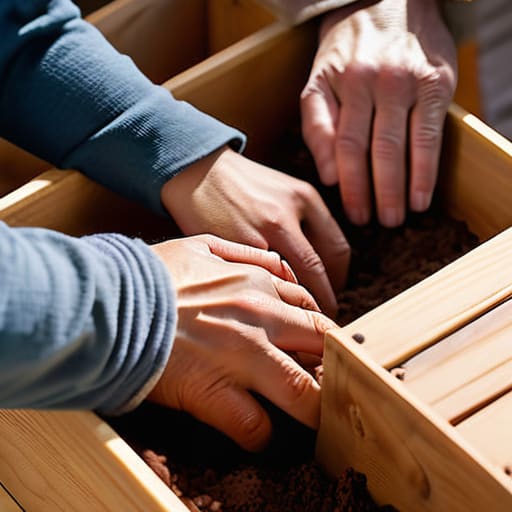
I remember sitting in a drafty community hall back in the nineties, staring at a blank grant application while a local councillor insisted we needed a professional consultant to calculate our “human capital metrics.” It was absolute nonsense. People get so bogged down in academic jargon that they forget the most basic truth: a person standing in the rain to help set up a street party isn’t just a line item on a spreadsheet. If you spend your whole afternoon trying to figure out the complex mathematics of how to value volunteer time in a funding bid, you’re going to lose the heart of your application. You don’t need a PhD to prove your worth; you just need to stop treating your neighbors like free labor and start showing the funder what their contribution actually builds.
In this post, I’m going to strip away the fluff and show you how to do this properly. I won’t give you a complicated formula that requires a calculator and a prayer; instead, I’ll share the practical, common-sense methods I used during my thirty years in local government. We are going to talk about how to turn those hours of hard work into a compelling story that makes a funder realize your group is an essential investment, not just a hobby.
Stop Hiding Your Muscle Start Monetizing Volunteer Contributions

When I was working in local government, I saw so many brilliant community projects fail to get funding simply because they presented themselves as “just a group of neighbours.” They spoke about their passion, but they didn’t speak the language of the people holding the purse strings. You have to understand that a funder isn’t just looking for a good cause; they are looking for an efficient machine. By monetizing volunteer contributions, you aren’t being greedy or clinical; you are translating your community’s sweat and dedication into a currency that a grant officer can actually understand.
If you tell a committee that ten people spent five hours weeding the community garden, that sounds lovely, but it’s vague. If you tell them those fifty hours represent a specific economic value based on local labour rates, you are suddenly quantifying non-financial assets in a way that demands respect. It moves your project from the category of “a nice hobby” to “a vital community service.” Don’t be shy about the math. When you show them the scale of the work being done for free, you aren’t just asking for money—you are proving that your group is a powerhouse of productivity.
The Math of Impact How to Value Volunteer Time in a Funding Bid

Now, I know what you’re thinking. You aren’t an accountant, and the idea of putting a price tag on Mrs. Higgins’s three hours of gardening feels a bit odd. But when you are sitting across from a grant officer, they need to see the scale of your operation. You can’t just say, “We have lots of help.” You need to show them that your group is effectively a powerhouse of human capital.
The easiest way to start is by using standard volunteer hour conversion rates. Most funders accept a set hourly rate—often based on the National Minimum Wage—to act as a proxy for the professional services you are providing for free. If your committee spends twenty hours a week organizing a community lunch, that isn’t just “helping out”; it is a quantifiable service.
When you move into more advanced charity funding application strategies, you can start quantifying non-financial assets more deeply. This isn’t about being cold or clinical; it’s about proving that for every pound the funder gives you, your volunteers are adding five pounds of extra value through their sheer presence and expertise.
Mastering Volunteer Hour Conversion Rates to Win Hearts

Now, this is where most small committees trip up. They have a pile of sign-in sheets, but they don’t know how to turn those names into a number that a grant officer can actually use. You aren’t just looking for a random figure; you are looking for a way of quantifying non-financial assets so the funder sees the true scale of your work. I always tell my neighbors: don’t just say “we had ten people help out.” That’s too vague. You need to use a consistent method for your volunteer hour conversion rates so that your data looks professional and, more importantly, reliable.
If you want to win over a skeptical assessor, you have to be consistent. If one person’s hour is worth £12 and another’s is worth £15, your whole application starts to look a bit messy. Pick a reputable benchmark—like the government’s hourly rate for volunteers—and stick to it across every single page. When you show that you’ve applied a rigorous logic to your numbers, you aren’t just asking for money; you are proving that you are a disciplined steward of their investment.
Beyond the Spreadsheet Quantifying Non Financial Assets for Donors
Now, I know what you’re thinking. You’ve got your spreadsheets balanced and your hourly rates set, but a grant application is more than just a ledger of time. If you only talk about hours, you’re missing the heart of the matter. When I worked in regeneration, the most successful groups didn’t just list how many people showed up; they described the invisible glue that held the street together. This is where quantifying non-financial assets becomes your secret weapon. You aren’t just providing a service; you are building social capital—the trust between neighbours that makes a community resilient when things go wrong.
When you sit down to write, try to capture those intangible wins. Did your community garden reduce loneliness among the elderly residents on the corner? Did your tidy-up morning stop a local park from becoming a magnet for anti-social behaviour? These aren’t just “nice to haves”; they are measurable outcomes. If you can frame these stories alongside your numbers, you move from merely asking for money to demonstrating a profound social return. Donors want to see that their pound is buying more than just supplies; they want to see it buying a stronger, safer neighbourhood.
Calculating Social Return on Investment to Prove Your Worth
Now, I know what you’re thinking: “SROI sounds like something a consultant in a sharp suit would say to justify a massive fee.” And you’re right, it can sound intimidating. But at its heart, calculating social return on investment is just a fancy way of asking, “If we spend £1,000 on this community garden, how much value are we actually creating for the people living here?” It isn’t about being a mathematician; it’s about being a good witness to the change you’re making.
When I was working in local government, the most successful bids didn’t just list costs; they showed the ripple effect. If your group provides a weekly lunch for seniors, you aren’t just paying for sandwiches. You are reducing isolation, which potentially lowers the strain on local health services. When you start quantifying non-financial assets—like the newfound confidence of a teenager or the improved mental health of a neighbor—you move from asking for a handout to offering a meaningful investment. Don’t just tell the funder you’re doing good; show them the social dividends your small committee is paying out to the street.
Pro Charity Funding Application Strategies That Command Respect
When you sit down to write, remember that the person reading your application isn’t just looking for a list of activities; they are looking for a reason to trust you. One of my favorite non-profit grant writing tips is to stop asking for permission and start presenting a business case. Don’t just say, “We need £5,000 for the community garden.” Instead, show them that your existing volunteer base has already provided £2,000 worth of groundwork, meaning their grant is the final piece of the puzzle rather than a lifeline for a sinking ship.
To truly command respect, you must weave your data into a narrative of stability. When you include your calculations for monetizing volunteer contributions, don’t just drop a number in a box and move on. Explain that these figures represent the deep-rooted community commitment that ensures the project won’t vanish the moment the cheque clears. By quantifying non-financial assets—like the local carpenter who lends his tools or the retired teacher who manages your books—you prove that your group isn’t just a collection of well-meaning neighbours, but a structured, professional entity ready to deliver.
Five ways to make your volunteer numbers actually mean something
- Don’t just guess a number; use the official Living Wage as your baseline for skilled tasks so funders see you aren’t just “getting by,” but are actually mobilizing real economic value.
- Break your hours down by role—a person fixing a community garden fence shouldn’t be valued the same as someone managing your group’s bookkeeping—to show you understand the professional weight of your team.
- Keep a simple, paper-based log of hours if you have to; I’ve seen too many good groups lose funding simply because they couldn’t prove they actually did the work they claimed in their last bid.
- Connect the hours to a specific outcome, like “40 hours of youth mentoring resulted in 10 improved school attendance records,” rather than just handing a funder a dry list of timestamps.
- Remember that “in-kind” support includes more than just time; if a local tradesman lends his van or a neighbor provides the meeting space for free, write that down as a tangible contribution to your project’s budget.
The real cost of a helping hand
When you’re sitting in front of a grant officer, don’t just tell them you have twenty volunteers; show them the economic weight of those twenty people. If you don’t put a value on their time, you’re essentially telling the funder that your community’s greatest resource is worth nothing at all.
Deborah Castellanos
A Final Word Before You Hit Submit
We have covered a lot of ground, from the practicalities of converting hours into a monetary value to the much more nuanced work of calculating social return on investment. Remember, the goal isn’t to turn your lovely community members into mere line items on a ledger; it is to show a funder that your group is a professional, high-impact entity. By documenting your non-financial assets and proving the real-world worth of every hour spent weeding a community garden or running a coffee morning, you move from asking for a handout to presenting a serious investment opportunity. Don’t let the sheer weight of the numbers intimidate you. Use them as the evidence they are.
At the end of the day, I have seen too many wonderful little committees dissolve simply because they couldn’t prove they were worth the effort. They had the passion, and they certainly had the people, but they lacked the paper trail to keep the lights on. Please, don’t let that be your story. When you sit down to finish that application, remember that those numbers are just a way of honouring the hard work your neighbours are already doing. You aren’t just filling out a form; you are building a foundation that ensures your group—and your street—can thrive for years to come.
