
I spent thirty years in local government, and if there is one thing I learned, it is that people love to make simple things unnecessarily complicated just to justify a high fee. You don’t need a PhD in archival science or a laboratory to figure out how to date an old photograph; you certainly don’t need to spend a fortune on an “expert” who does little more than squint at the edges. I remember sitting in a drafty community hall last autumn, sorting through a box of donated parish records, and realizing that the most vital clues aren’t hidden in chemical compositions, but in the small, tangible details—the stiffness of a collar or the way the light hits a certain type of matte paper.
I’m not here to give you a lecture on the physics of light or complex silver gelatin processes. Instead, I want to share what I’ve learned from years of digging through the paper trails of our changing neighborhoods. I will show you how to use your own eyes to spot the markers of a specific era, focusing on the practical, common-sense observations that actually work. We are going to look at the clues that matter, so you can finally put a name and a year to those faces staring back at you.
Understanding How to Date an Old Photograph
When I was working on the regeneration projects in the eighties, we often stumbled upon old family albums in the local archives. To really get a sense of when a picture was taken, you can’t just look at the faces; you have to look at the physical object itself. One of the most reliable methods involves identifying photographic paper types by feel and sight. A heavy, slightly textured cardstock often points to a different era than the glossy, thin finishes we grew accustomed to in the later decades.
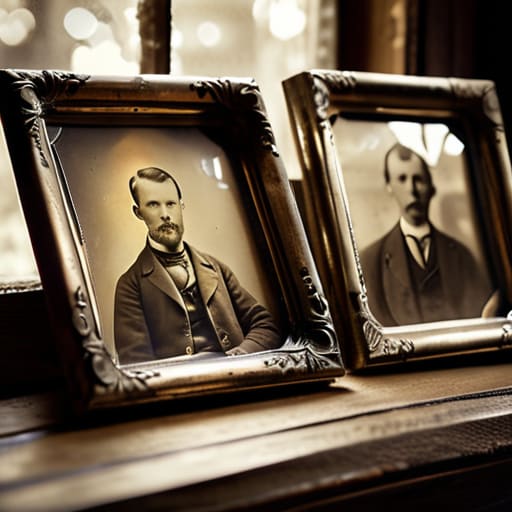
Beyond the paper, I always tell my friends in the parish committee to look at the subjects. Analyzing historical fashion trends is perhaps the most intuitive way to narrow down a decade. A stiff, high collar or the specific drape of a woollen waistcoat can tell you more than a faded date stamp ever could. If you’re looking at something much older, you might even need to learn the daguerreotype vs ambrotype differences to understand if you’re holding a silvered copper plate or a glass negative. It’s these small, tangible details that turn a nameless image into a piece of documented history.
Key Things to Know
When I’m looking through a box of old family snapshots or a collection of local history scraps, I’ve learned that you can’t just guess based on a feeling. You have to look at the physical evidence. One of the most reliable methods involves identifying photographic paper types; the texture and weight of the card can tell you quite a bit about whether you’re holding a Victorian cabinet card or a mid-century snapshot. If the image feels brittle or has a specific sheen, it’s a clue that shouldn’t be ignored.
I also find that analyzing historical fashion trends is often faster than any technical test. I remember a particular group of residents trying to date a photo of our high street from the 1940s; they were stumped until someone noticed the specific cut of a lapel and the way a hat sat on a woman’s head. People often forget that clothing is a timestamp. If you pay attention to the stiffness of a collar or the silhouette of a dress, you’re already halfway to solving the puzzle.
Practical Tips and Steps
When I’m looking through a box of old clippings or family albums, I don’t just glance at the faces; I look for the clues left behind in the margins. One of my favorite vintage photo identification tips is to start with the physical medium itself. If you are holding something heavy and metallic, you might be looking at a daguerreotype, but if it’s on glass, it’s likely an ambrotype. Knowing the difference between daguerreotype vs ambrotype differences is vital because it immediately narrows your search window by decades.
Once you’ve handled the object, turn your attention to the people in the frame. I always find that analyzing historical fashion trends is the most reliable way to ground a photo in time. A specific type of lace collar or the way a man’s waistcoat sits can tell you more than a faded date stamp ever could. It’s a bit like reading the minutes of a meeting; you have to look at the small, specific details of how things were done back then to understand the whole picture.
Common Mistakes to Avoid
One mistake I see people make far too often—and I’ve seen this in countless community archive projects—is rushing to a conclusion based on a single detail. It is tempting to look at a lace collar and declare a decade, but analyzing historical fashion trends requires a bit more patience than that. A style might linger in a rural village long after it has vanished from the city streets. If you rely solely on a dress to tell the story, you might misplace your timeline by a good ten years.
Another pitfall is neglecting the physical object itself. People often get so caught up in the faces in the picture that they forget to look at the chemistry. You can learn a great deal simply by identifying photographic paper types or noting the way the light hits the surface. I once saw a group try to categorize a collection, only to realize they were mixing up silver prints with much older processes because they hadn’t checked the texture. Take your time; the paper often holds more truth than the subject’s smile.
Final Thoughts
At the end of the day, looking at these old images isn’t just about being a detective; it’s about respect. When I’m sorting through old parish records or a neighbor hands me a dusty envelope, I realize that these pictures are the only evidence left of how people actually lived. Whether you are identifying photographic paper types or simply noticing the way a person holds themselves, you are connecting with a moment in time that would otherwise be lost to the ether.
It can feel a bit overwhelming at first, especially when you’re trying to navigate the subtle daguerreotype vs ambrotype differences or deciphering why a certain collar looks so stiff. But don’t let the technicalities discourage you. If you take it slow and look for the small, human details, the history will start to reveal itself. Just remember to keep a notebook nearby to jot down your findings. If we don’t record what we discover, we’re just as bad as the committees I used to work with who let all their hard-won knowledge vanish because nobody bothered to take minutes.
A few things I’ve learned from looking closely
- Don’t just look at the faces; look at the edges. The way a photo is cut or whether it has those rounded corners can tell you a lot about the era of the machinery used to make it.
- Turn the thing over. I’ve spent many an afternoon looking at the backs of prints, because a handwritten note or even a specific type of studio stamp is often more reliable than the image itself.
- Pay attention to the “fashion” of the photo. It isn’t just about the clothes people are wearing, but the way they are posing—stiff and formal usually points to an earlier period when exposure times were much longer.
- Check the paper quality. If it feels like heavy cardstock or has a specific sheen, that’s a clue. I always say you can tell a lot about a decade by the very material it was printed on.
- Look for the chemical signs. Sometimes a slight discoloration or a specific type of fading isn’t just age; it’s a signature of the specific photographic process used at the time.
The Value of the Details
When I’m looking through an old folder of committee notes or a faded snapshot from a street party, I’ve learned that the date isn’t usually written in big, bold letters; you have to find it in the small, quiet things—the way a person holds their coat or the specific shade of a shopfront—the same way you learn the history of a street by watching how the neighbors actually tend to their gardens.
Deborah Castellanos
A Final Look at the Details
When you sit down with an old print, remember that dating it isn’t about finding one single magic clue; it is about layering the evidence. You have to look at the chemistry of the paper, the way the light hits the silver, and those tiny, often overlooked details like the shape of a lapel or the specific style of a typeface on the back. If you take the time to cross-reference the physical condition with the historical context of the clothing or the setting, you move from mere guessing to informed deduction. It takes a bit of patience—the same kind of patience I used when auditing decades of council records—but that methodical approach is what prevents you from misplacing a piece of history in the wrong decade.
Ultimately, these photographs are more than just scraps of paper or chemical stains; they are the unspoken records of the people who walked our streets before us. Whether you are trying to trace a family lineage or simply understanding how a neighborhood used to look, every bit of research helps keep that memory from fading into obscurity. I’ve always believed that if we don’t take the time to document the small things properly, we lose the thread of our own story entirely. So, hold onto those images tightly, write down what you find, and treat every discovery as a small victory for the truth.
