

I remember sitting in a drafty church hall back in ’94, watching a well-meaning volunteer try to manage the summer fete’s bake sale while juggling three different tea trays and a heavy metal biscuit tin. By the end of the afternoon, the tally was a complete mess, and half the committee spent the next week arguing over whether we’d actually made a profit or just lost the change in the sofa cushions. It’s a common mistake to think that knowing how to handle cash at an event requires fancy software or a complicated accounting degree; in reality, it’s usually just a matter of preventing the chaos before it starts.
I’m not here to sell you on expensive digital payment systems or complicated spreadsheets that nobody has time to update. My goal is to give you the practical, boots-on-the-ground methods I used during my thirty years in local government to keep things tidy. I’ll show you how to set up a simple, foolproof system that protects your volunteers and ensures every penny goes exactly where it was intended: back into your community.
The Foundation How to Handle Cash at an Event Without Chaos

The Foundation: How to Handle Cash at an Event Without Chaos
I’ve seen too many lovely village fêtes fall apart because the treasurer spent the final hour of the evening frantically searching for a missing twenty-pound note. Chaos usually starts when we assume people will just “be careful.” You cannot rely on good intentions alone; you need a system. Before the first stall opens, I always insist on a clear set of cash handling procedures for staff, even if those “staff” are just three neighbours and a teenager from the parish. Everyone needs to know exactly who touches the money and, more importantly, who doesn’t.
The secret to a peaceful evening is the paper trail. I suggest creating a simple cash drawer audit checklist that gets filled out every time a float is handed over or a till is closed. It feels a bit formal, perhaps, but it protects your volunteers from even the hint of suspicion. If you have a dedicated person responsible for the end-of-night counting, you’ll find that the transition from a bustling afternoon to a quiet, reconciled bank deposit is much smoother. It’s about building trust through transparency.
Shielding the Pot Proven Cash Handling Procedures for Staff

When you’re running a street fair or a local festival, you aren’t just managing money; you are managing people’s trust. I’ve seen too many lovely community efforts crumble because a volunteer felt awkward asking for a receipt or, worse, because someone suspected a bit of “skimming” from the till. To prevent this, you need clear cash handling procedures for staff—and I use the word “staff” loosely, as most of your team will be well-meaning neighbors. Even so, everyone needs to know exactly where the coins go. I always suggest a “two-person rule”: no one should ever be alone with a full cash box. It isn’t about a lack of trust; it’s about protecting the volunteers from any possible misunderstanding.
Before the first stall opens, sit your team down. Give them a simple cash drawer audit checklist so they can verify their starting float. It sounds a bit formal for a village fete, but it saves hours of heartache later. When the sun goes down, don’t let anyone rush the end of night cash counting just because they want to get home. Do it in a quiet room, with two sets of eyes on the figures, and record it immediately. If you document the process as it happens, you aren’t just counting coins; you’re building a paper trail that keeps the committee’s integrity intact.
Locked Tight Mastering Event Point of Sale Security
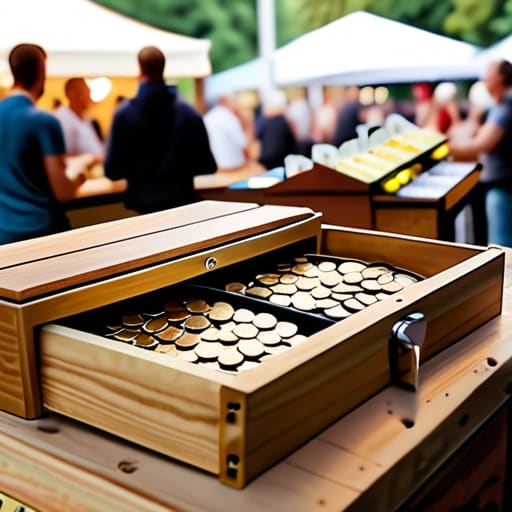
Once you have your staff trained, you have to look at the physical setup. I’ve seen too many village fêtes where the money tray is just sitting out on a folding table like an invitation. For proper event point of sale security, you need more than just a heavy box; you need a strategy of “less is more.” Never let a large amount of notes sit in the till. As soon as you hit a certain threshold, move the big notes to a secure, locked location—ideally a small safe or a locked cash box kept in a different area entirely.
It is also vital to keep your workspace tidy. A cluttered table leads to mistakes, and mistakes lead to discrepancies that are a nightmare to reconcile later. I always suggest a simple cash drawer audit checklist tucked into the side of the till. This allows your volunteers to quickly verify their starting float and mid-shift totals without feeling rushed. If you keep the process disciplined and the physical space organized, you’ll find that minimizing theft at large events becomes much easier, leaving you more time to actually enjoy the community spirit you’ve worked so hard to build.
Small Change Big Impact Managing Petty Cash at Festivals
It’s easy to focus all your energy on the big ticket items—the stall fees and the main gate takings—but it’s the little things that often trip up a committee. I’ve seen so many lovely neighbourhood festivals stumble because they didn’t have a clear plan for managing petty cash at festivals. You’ll inevitably find yourself needing to buy a last-minute bag of ice, a replacement roll of bin liners, or even a quick fix for a broken trestle table. If you don’t have a formal way to track these small outflows, your accounts will never balance at the end of the weekend, and that’s when the finger-pointing starts.
My rule of thumb is simple: treat the petty cash tin with as much respect as the main till. Never let a volunteer just “take a fiver” for milk and promise to bring a receipt back later. Even for the smallest purchase, I insist on a paper trail. Keep a dedicated notebook in the cash box specifically for these minor expenses. By pairing a strict voucher system with a regular cash drawer audit checklist, you ensure that every penny is accounted for, keeping the committee’s integrity—and the community’s trust—perfectly intact.
The Guardrail Minimizing Theft at Large Events With Vigilance
When you move from a small street fair to a larger festival, the sheer volume of hands moving through the crowds changes the math. It isn’t just about being careful; it’s about creating a system that makes theft difficult and obvious. I’ve seen too many wonderful community projects stall because a single “disappearance” caused a rift in the committee that couldn’t be mended. To prevent this, you must prioritize minimizing theft at large events by ensuring no single person is ever left alone with an open till or an unsecured bag of coins.
One of the most effective ways to keep things above board is to implement a strict cash drawer audit checklist that is completed at regular intervals, not just when the sun goes down. If a volunteer notices the float is off by even a few pounds mid-afternoon, it needs to be recorded immediately. This isn’t about a lack of trust in your neighbours; it is about protecting the integrity of the group. By making the numbers transparent and the checks frequent, you ensure that the hard-earned money stays exactly where it belongs: in the community pot.
The Final Count End of Night Cash Counting and Audits
When the lights go down and the last stall is packed away, there is a temptation to just scoop everything into a bag and head home. Resist that urge. This is the moment where most community groups stumble, and it is precisely why I am such a stickler for documentation. You need a formal process for end of night cash counting that involves at least two people—never one person alone with the money. One person counts, the other observes and verifies, and both sign off on a sheet. It isn’t about a lack of trust; it’s about protecting everyone involved from even the hint of a misunderstanding.
I always recommend keeping a simple cash drawer audit checklist on a clipboard right at the counting station. It should note the starting float, the total takings, and any discrepancies found. If you find yourself fifty pounds short, don’t just shrug it off; record it. Having a paper trail of these small gaps is the only way to spot patterns that might suggest a breakdown in your earlier cash handling procedures for staff. A clear record today prevents a massive headache for the committee treasurer tomorrow.
Five Golden Rules for the Treasurer's Peace of Mind
- Never let one person be the sole keeper of the keys or the cash; even in a tiny committee, we need two sets of eyes on the money to protect everyone from suspicion.
- Keep a dedicated “float” in a separate, clearly marked pouch so you aren’t accidentally mixing the starting change with the hard-earned takings from the bake sale.
- Use a simple, handwritten tally sheet for every single transaction; it doesn’t need to be fancy, but it does need to be consistent so the numbers actually add up at the end.
- Stop using the cash box as a general storage container for things like lost keys or volunteer badges; a box meant for money should only ever hold money.
- Set a “mid-point check” halfway through the event to move large amounts of cash into a more secure, hidden location so you aren’t sitting on a heavy till all afternoon.
The Paper Trail of Trust
When you’re handling a community pot, you aren’t just counting coins; you’re guarding the neighborhood’s trust. If it isn’t written down in a ledger by the end of the night, it didn’t happen, and a missing tenner is a much harder thing to fix than a missing receipt.
Deborah Castellanos
The Paper Trail is Your Friend
At the end of the day, managing cash isn’t about being suspicious of your neighbours; it is about protecting the work you have all done together. We have talked about everything from the initial setup of a secure till to the importance of having two sets of eyes on the final count. If you follow these steps—securing your petty cash, training your volunteers, and keeping a meticulous paper trail—you remove the guesswork that leads to heartache. Remember, the goal is to ensure that every penny intended for the community garden or the village hall roof actually ends up there. A clear system is what separates a successful fundraiser from a stressful mess that leaves people feeling uneasy.
I have seen too many wonderful little committees dissolve simply because a single bag of coins went missing and nobody had a written process to figure out why. Don’t let your hard work vanish into a cloud of confusion. When you treat your community pot with respect and professional care, you aren’t just counting coins; you are building institutional trust. You are proving to your neighbours that their contributions are safe in your hands. Keep your ledgers tidy, keep your procedures simple, and most importantly, write it all down. That way, when the next group takes over, they won’t have to start from scratch.
